


The investment case is therefore less about selling rockets and more about using cheaper access to space to create multiple future revenue streams across communications, defence and AI infrastructure.
Every so often a private company grows so large, so quietly, that its eventual arrival on public markets forces the rest of us to recalibrate our sense of scale. SpaceX is that company. It was the biggest Initial Public Offering (IPO) in history at roughly $1.8 trillion and raised $85.7 billion in proceeds.
To put that in perspective, no company in the top 100 global listings since 2000 has come close on offer size, and only a handful of state-scale enterprises approach it on market value, see Figure 1.
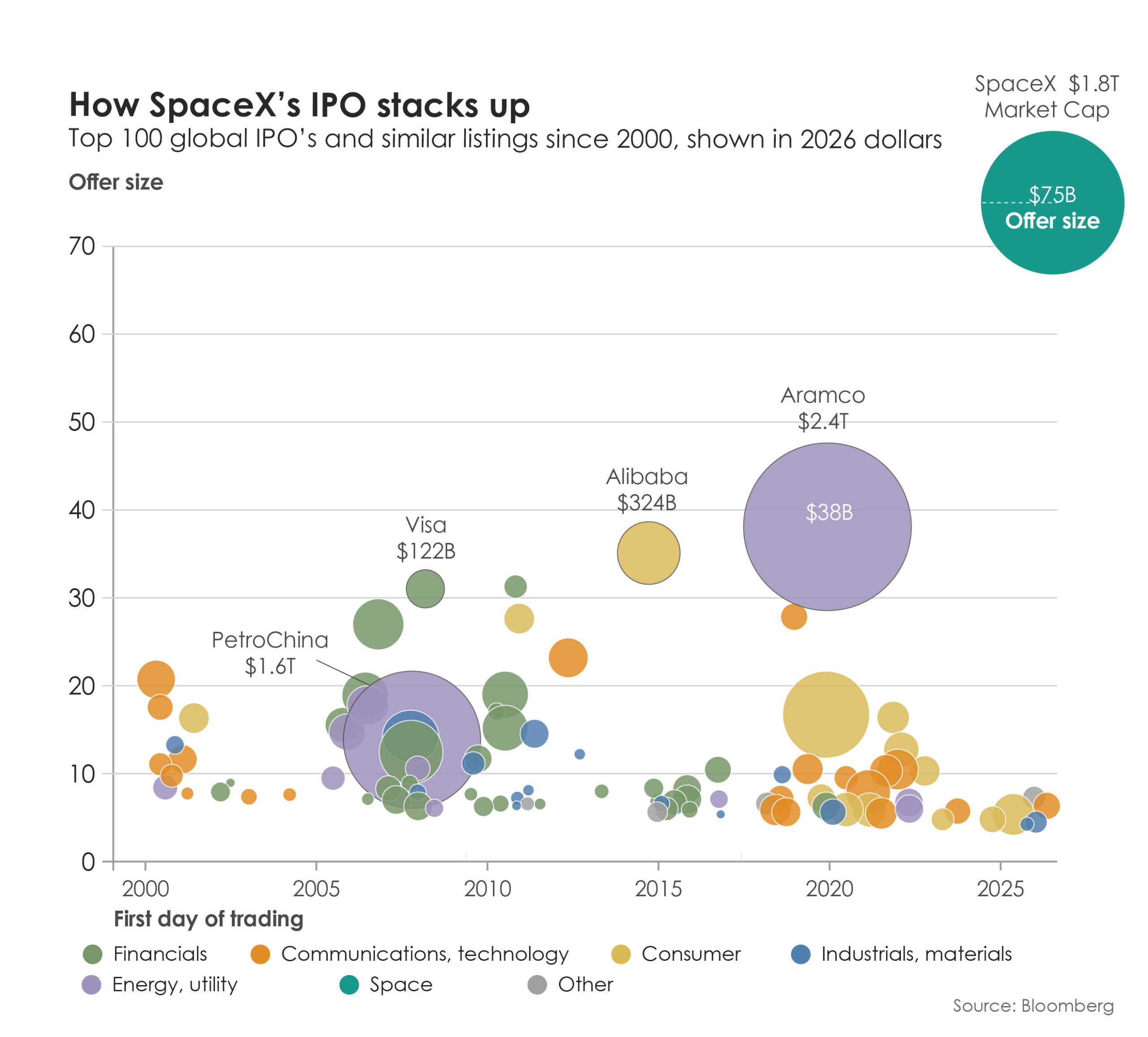
Figure 1: SpaceX IPO against similar listings since 2000
In this article we try to understand the potential size of SpaceX’s total addressable market and what could drive value from here. It must be remembered that this record-breaking listing in itself is not an investment case, some of the largest IPOs in history have delivered lacklustre returns to shareholders in early years. The IPO size only tells you that the market is aware of the potential, it does not tell you anything about the price you are paying.
The market has had to grapple with this notion, and following the IPO, SpaceX shares surged more than 25% as investors priced in the company’s long-term potential, before they fell almost 30% from their peak as investor expectations began to normalise.
A brief history of SpaceX
SpaceX may dominate headlines today, thanks in no small part to its outspoken founder, Elon Musk, but the company is far from an overnight success. Founded in 2002 after Musk invested $100 million of his own money, SpaceX set out with an ambitious goal – to dramatically reduce the cost of access to space. The early years were challenging, with three failed Falcon 1 launches bringing the company close to bankruptcy before a successful fourth launch in 2008 secured a crucial NASA contract.
Over the following decade, SpaceX transformed the economics of the launch industry through the development of reusable Falcon 9 rockets. By successfully landing a Falcon 9 booster in 2015, the company proved that orbital-class rockets could be reused economically. This dramatically reduced launch costs and established a structural cost advantage that its competitors have struggled to replicate.
SpaceX’s lower cost-of-launch unlocked the company’s next phase of growth. The Dragon spacecraft – a reuseable, capsule style craft – began transporting cargo, and later astronauts, to the International Space Station, while the company used this launch capability to deploy Starlink, now the world’s largest satellite constellation and a rapidly growing global broadband network. Today, SpaceX is developing Starship, a fully reusable heavy-lift launch system that aims to reduce launch costs even further while supporting future missions to the Moon and Mars.
How SpaceX makes money
Two and a half decades on, SpaceX has multiple avenues of growth and looks a lot different to its original operation. It is no longer simply a rocket company; it is a vertically integrated business, with three segments, which in 2025 generated $18.7 billion of revenue, growing at 33% per year. The structure allows its cheap-launch business to be subsidised by a high margin and cash generative connectivity business, which is SpaceX’s crown jewel, accounting for most of the profits (EBITDA), see Figure 2.
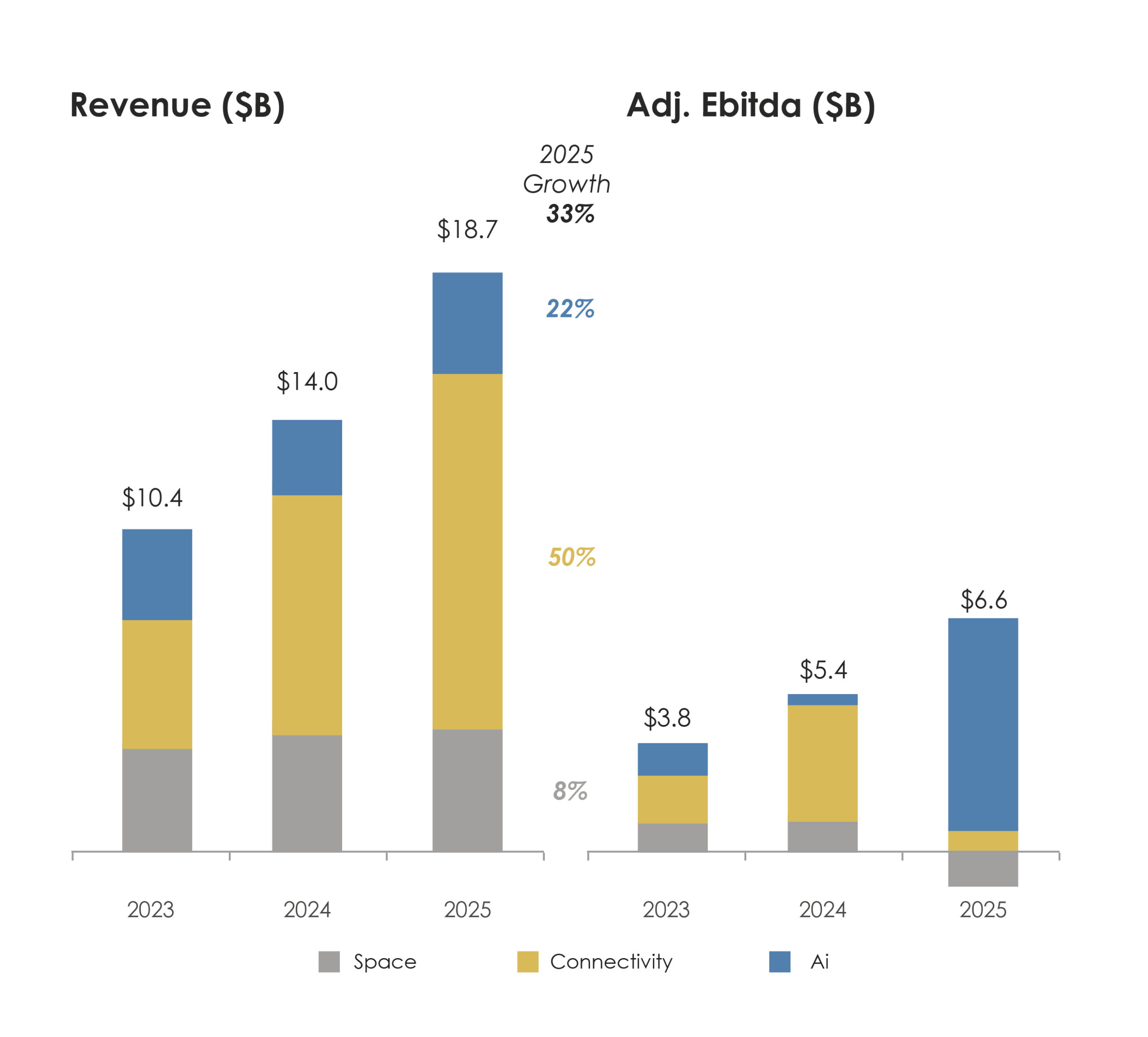
Figure 2: SpaceX revenue streams and profit streams (EBITDA)
Source: SpaceX Roadshow presentation 2026, Company filings
It is worth understanding each segment on its own terms, because they are at very different stages of maturity.
Connectivity (Starlink): Connectivity is the profit engine. Starlink sells internet services to homes, businesses, airlines, cruise ships, and governments. It generated $11.4 billion of revenue in 2025 (61% of group revenue) and is highly profitable, with operating income of $4.4 billion, and is growing at over 120% a year, with its subscriber numbers doubling last year. A newer service, Starlink Mobile, connects ordinary mobile phones directly to satellites, allowing users to send messages and access basic data services, even in areas with no traditional cellular coverage. It already reaches 7.4 million devices across 30 countries and represents a genuinely new market.
Space (Launch and Starship): Launch is the backbone of SpaceX. Every Starlink satellite, direct-to-cell service, and future orbital infrastructure project depends on SpaceX being able to place payloads into orbit cheaply and reliably. Think of this segment as the infrastructure that makes everything else possible. The Launch business generated $4.1 billion of revenue in 2025 from 170 rocket launches with a mission success rate above 99%. It roughly breaks even because SpaceX ploughs its Launch profits into developing Starship, the next-generation rocket.
Artificial Intelligence (xAI): xAI is SpaceX’s newest segment and the company’s largest growth bet. It combines the X platform (previously Twitter with roughly 550 million monthly users), Grok AI assistant (with 117 million monthly users), and two of the world’s largest AI data centres. In 2025, the segment’s revenue was $3.2 billion but the segment is loss-making because SpaceX is investing heavily into infrastructure, acquisitions and operations, with $12.7 billion of capital spending in 2025 alone. Importantly, the AI data centres have already attracted a blue-chip customer: Anthropic, a leading AI lab, which has agreed to pay SpaceX $1.25 billion per month for computing capacity through to May 2029. That’s roughly $15 billion a year if it runs to term. The company has also signed a multi-year cloud and AI infrastructure agreement with Google, providing additional validation that external customers are willing to rent large-scale compute capacity (the total processing power, memory, and resources available in a digital system to execute software, crunch data, or run algorithms) from the platform.
In summary, investors can think of SpaceX as an internally funded launch and infrastructure platform that uses a low-cost launch capability to build and expand higher-margin connectivity and AI businesses. Currently, Starlink generates the cash flow, Launch provides the strategic infrastructure that enables future growth, and Starship represents the key source of long-term optionality. The investment case is therefore less about selling rockets and more about using cheaper access to space to create multiple future revenue streams across communications, defence and AI infrastructure.
Future growth streams
One of the more striking aspects of the SpaceX investment case is the sheer size of the opportunity that SpaceX’s management believes it is addressing. The company estimates its total addressable market at around. To put that into perspective, that is roughly the size of the United States (US) economy and larger than the combined GDP of China and Germany, see Figure 3. While that headline number deserves a healthy degree of scepticism, it highlights an important point.
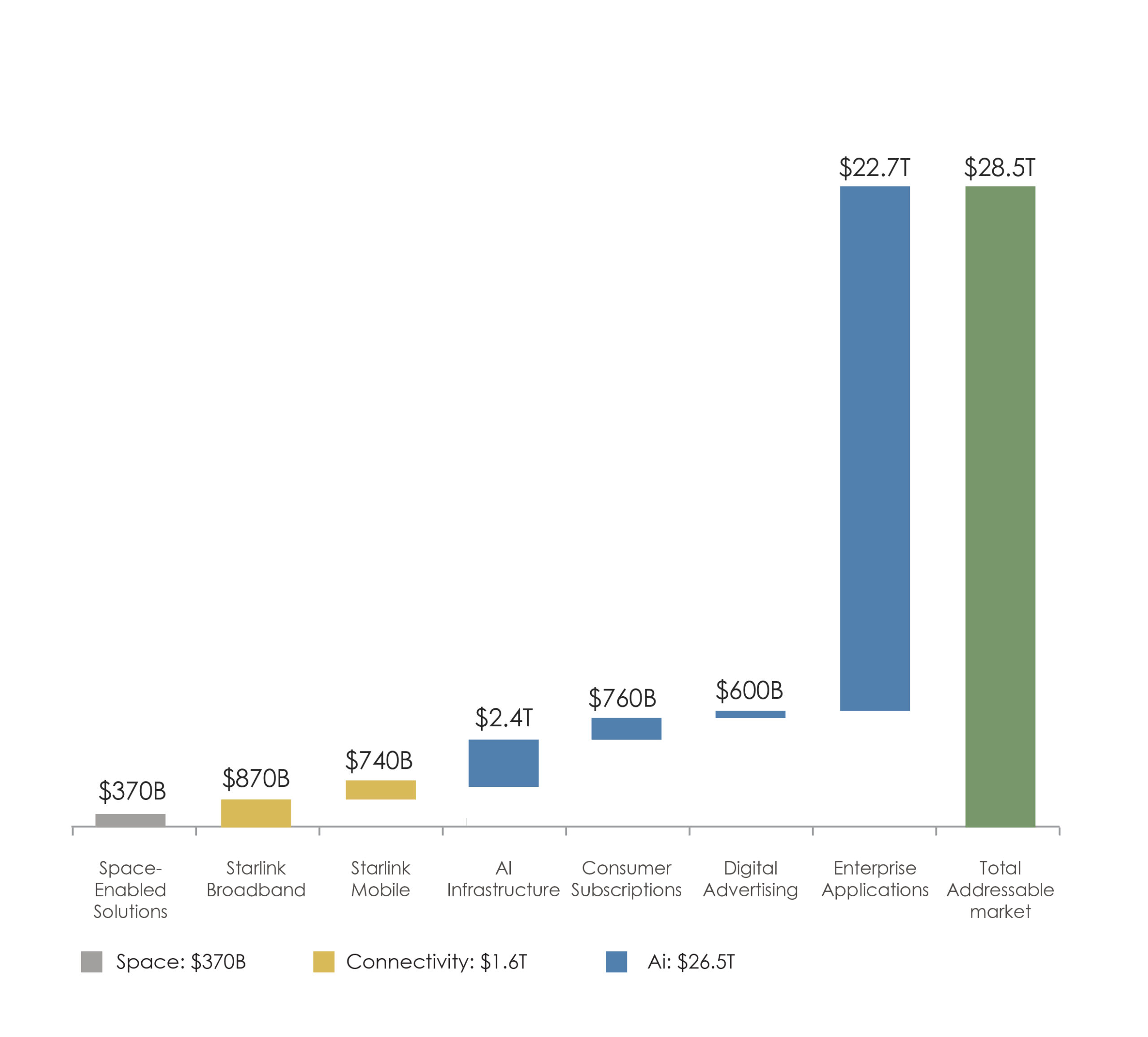
Figure 3: SpaceX growth outlook
Source: SpaceX S-1 filling
SpaceX’s first growth engine is its space capability through Starship. Falcon 9 has already transformed the economics of space by making rockets reusable. Starship aims to repeat that step change. If successful, it should reduce launch costs by another order of magnitude while dramatically increasing payload capacity. Lower launch costs not only strengthen SpaceX’s position in the launch market but also reduce the cost of building and expanding its own satellite network. In many ways, Starship is the enabling technology that unlocks much of the company’s longer-term growth.
The second opportunity lies in scaling businesses that already exist today. The company’s connectivity business, Starlink, has grown into the world’s largest satellite broadband network and is still in the early stages of penetrating a global connectivity market that serves billions of potential users. Beyond residential broadband, the business is expanding into direct-to-cell services, enterprise connectivity, aviation, maritime and government applications. As the subscriber base grows, Starlink has the potential to become a highly cash-generative software and infrastructure business that funds the next phase of SpaceX’s expansion.
Beyond these businesses lies a much larger, but far more uncertain, opportunity set. SpaceX’s management believes that dramatically lower launch costs could make entirely new industries economically viable, ranging from space-based data centres and AI infrastructure to in-space manufacturing, lunar logistics and eventually human settlement beyond Earth. Many of these markets are unlikely to contribute meaningfully for years, and some may never materialise. Nevertheless, they represent valuable long-duration options that are difficult to replicate given SpaceX’s unique combination of launch capability, satellite infrastructure and engineering expertise.
From an investment perspective, we think about SpaceX in three layers:
- The Launch business provides a durable foundation with significant technological advantages.
- Starlink is the company’s primary value creation engine today, generating recurring, high-margin revenue from a rapidly expanding customer base.
- The more ambitious projects, led by Starship, should be viewed as long-dated options that could substantially increase the company’s addressable market if execution is successful. While these opportunities are difficult to value today, they help explain why investors are willing to assign such a premium valuation to SpaceX. Much of that valuation reflects the market’s confidence in the company’s and Musk’s ability to execute on its ambitious long-term roadmap.
Measuring SpaceX’s value
The biggest mistake investors can make is trying to fit SpaceX into a traditional industry classification. To label it as a rocket company or a telecommunications business would be inaccurate. Instead, SpaceX is best thought of as a vertically integrated infrastructure company built around one core capability, to dramatically reduce the cost of accessing space. Every reduction in launch costs not only improves the economics of the Launch business itself, but also lowers the cost of deploying satellites, expands the addressable market for Starlink and enables entirely new businesses that would otherwise be unprofitable.
This is what makes the investment case so unusual. The Launch business is no longer just a source of revenue; it has become the infrastructure that enables everything else. Rather than maximising profits from each individual launch, SpaceX increasingly uses its launch capability to build and operate its own businesses. Launches deploy Starlink satellites, support government missions, and in future could underpin entirely new markets in global connectivity, AI infrastructure and space-based services. The more launch costs fall, the more attractive each of these businesses becomes.
That makes Starship the single most important technology within the company. Starlink may be the profit engine today, but Starship is the platform that determines how many future profit engines can exist tomorrow. If Starship achieves the step-change in cost and launch cadence SpaceX management is targeting, it has the potential to unlock multiple new revenue streams simultaneously. If it falls short, many of those opportunities become significantly less valuable or are pushed much further into the future.
Therefore, to value a company made up of segments which each have different economics and is at a different stage of maturity, we think the most appropriate approach to valuing SpaceX as a company is to use a sum-of-the-parts (SOTP) valuation, which values each business independently before combining them into a total equity value.
The largest contributor to SpaceX’s intrinsic (true value based on fundamentals, assets and future cashflow) is Starlink. It is already one of the world’s largest satellite broadband businesses, generating recurring revenue, attractive margins and substantial cash flow. The Launch business deserves value in its own right given its dominant competitive position, although much of its strategic value is realised indirectly by supporting Starlink and the company’s other businesses rather than through external Launch revenue alone. The AI business is more difficult to value, with meaningful revenue already emerging but profitability still some way off.
Beyond these operating businesses sits what we believe is the most important component of the investment case – optionality. Unlike many early-stage technology companies, SpaceX has a number of credible opportunities that could evolve into meaningful businesses over time, including direct-to-cell connectivity, defense applications and AI infrastructure. We assign these opportunities a probability-weighted value rather than assuming they all succeed. At the same time, we deliberately assign little or no value to highly speculative concepts such as Mars colonisation or asteroid mining. While they capture headlines, they are simply too uncertain to justify paying for today.
This distinction between intrinsic value and optionality is central to how we think about the business. The existing businesses already justify substantial value on their own. The upside comes from successfully converting today’s technological advantages into entirely new future cash-flow streams rather than simply growing the businesses that already exist, see Figure 4.
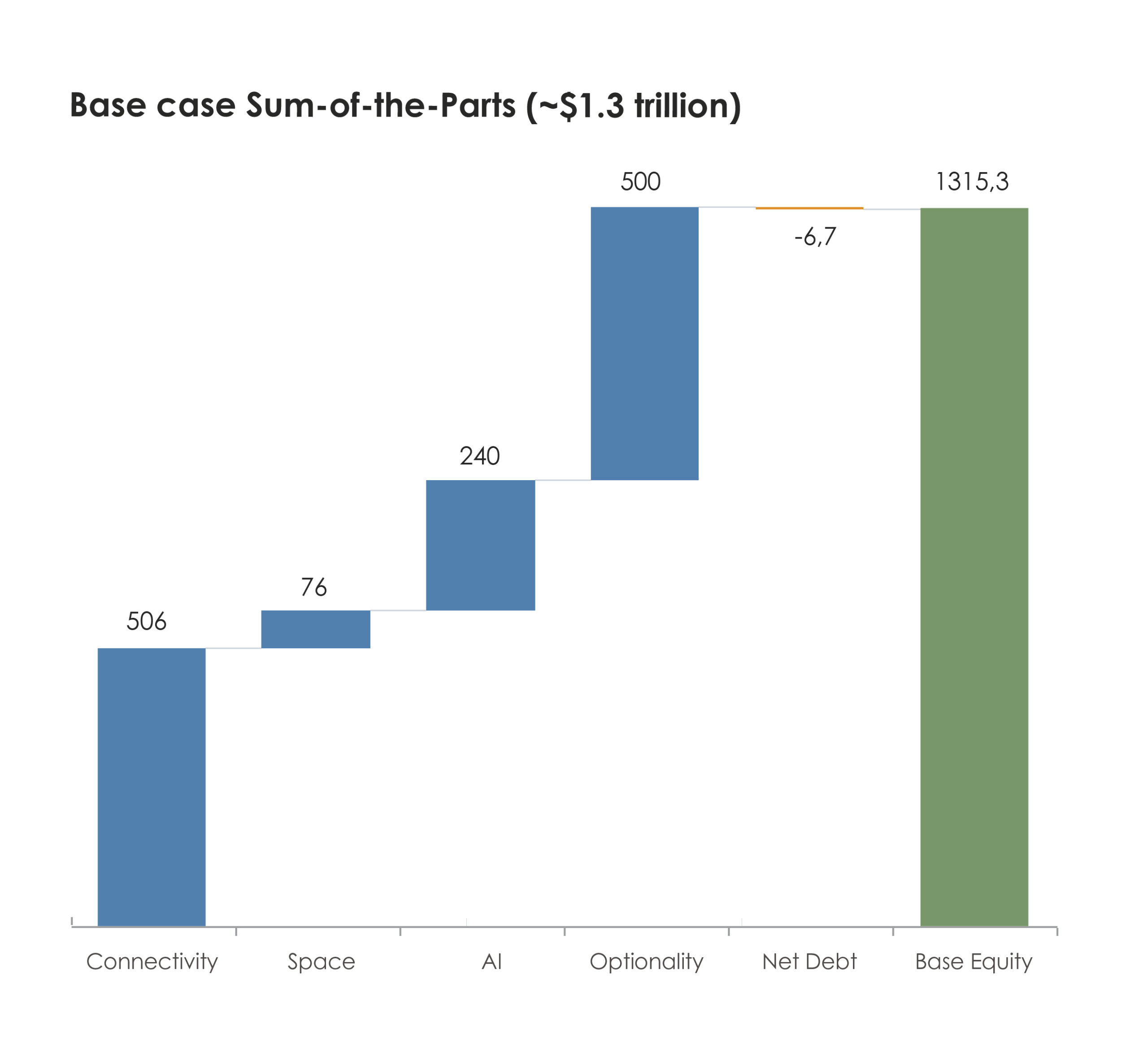
Figure 4: Valuation based on SOTP
Source: CAM estimates
Given the number of moving parts, any valuation should be viewed as a range rather than a single point estimate. Ultimately, the answer depends less on next year’s earnings and more on whether SpaceX successfully executes against a handful of key operational milestones over the next decade, see Figure 5.
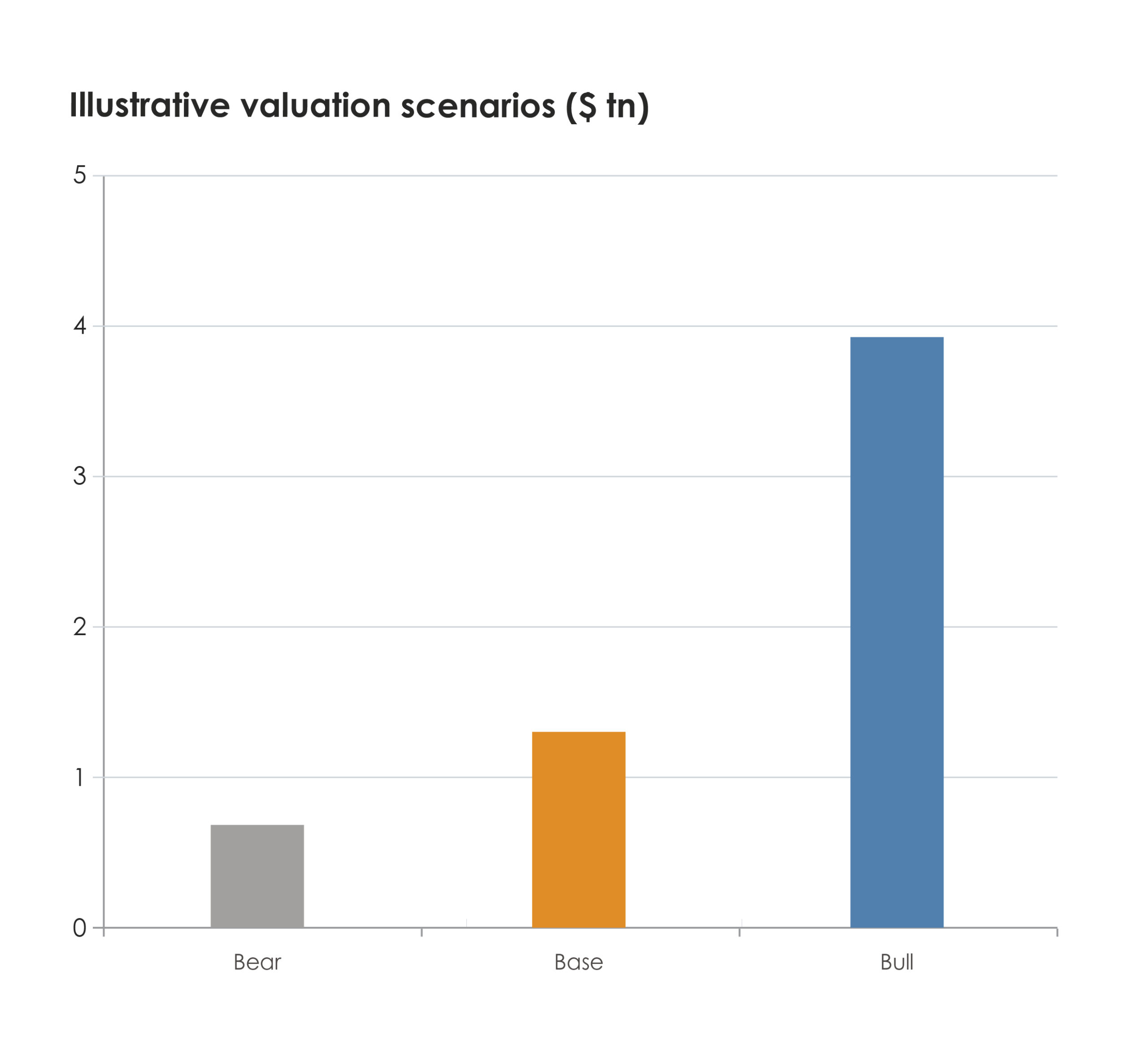
Figure 5: Illustrative valuation scenarios based on SOTP
Source: CAM estimates
- In our bear case, worth around $700 billion, Starlink continues to grow but at a much slower pace as competition increases and pricing comes under pressure. More importantly, Starship struggles to reach reliable commercial operations, delaying many of the opportunities that depend on dramatically lower launch costs. The business would remain a highly valuable communications company with an industry-leading launch capability, but much of today’s embedded optionality would disappear.
- Our base case points to a valuation of approximately $1.3 trillion. Here, Starlink continues scaling into one of the world’s largest broadband providers, Starship reaches commercial operations over the next few years and the AI business demonstrates a credible path towards attractive long-term returns. In this scenario, investors receive the benefit of a world-class connectivity business together with measured value for several future opportunities, but not every long-term ambition needs to succeed.
- The bull case, approaching $4 trillion, requires considerably more to go right. Starship must achieve rapid reusability, materially lowering the cost of access to space and enabling entirely new markets to become commercially viable. Starlink continues expanding globally while maintaining attractive economics, the AI business evolves into a meaningful profit contributor, and newer opportunities such as direct-to-cell connectivity, defence services and AI infrastructure mature into significant businesses in their own right. Rather than simply producing higher earnings, the company creates multiple new profit pools that do not meaningfully exist today.
Perhaps the most important takeaway is that only a handful of variables truly determine where within this range SpaceX ultimately lands. Starship’s execution, Starlink’s ability to continue growing while maintaining healthy economics, the return generated on AI investments and the pace at which new businesses transition from concepts into commercial reality will account for the vast majority of the company’s long-term value creation. Everything else is largely second order, see Table 1.
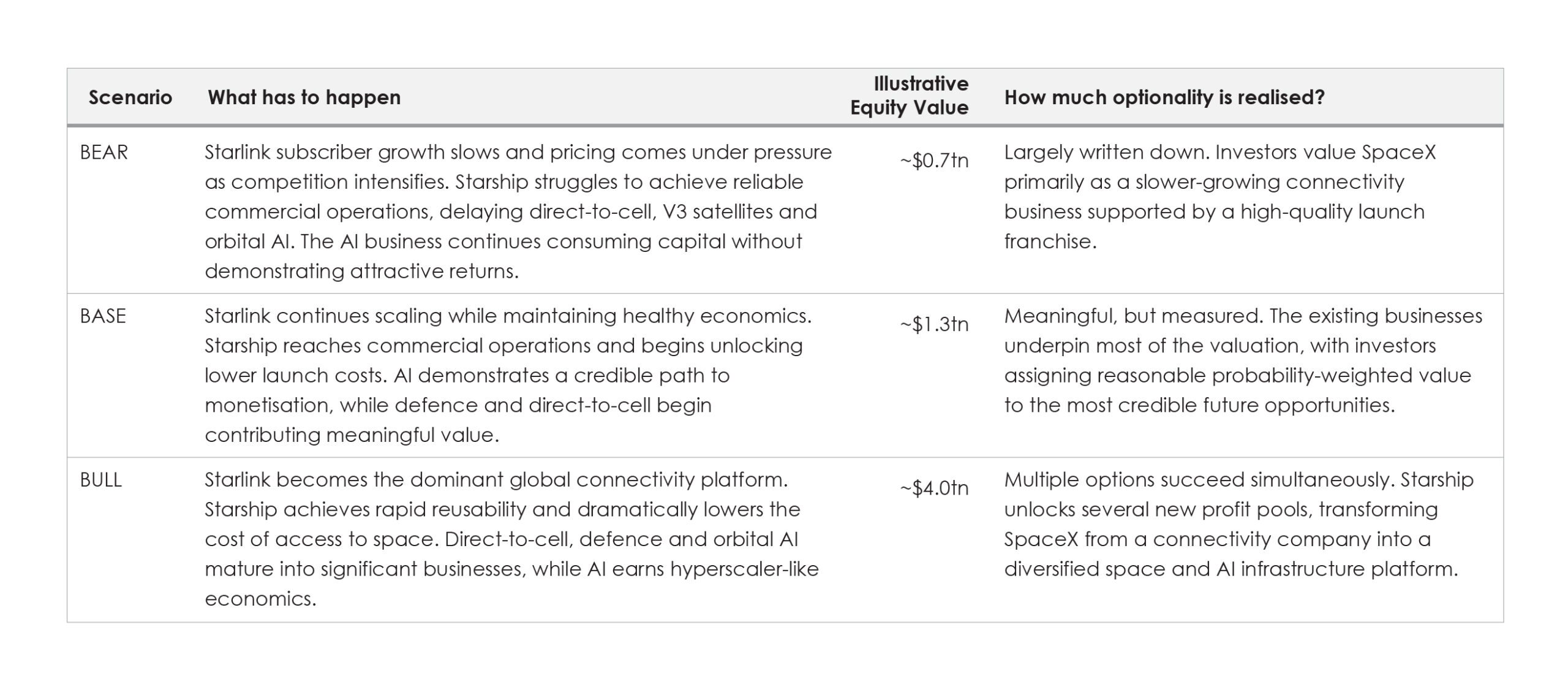
Table 1: Summary of CAM’s SpaceX scenarios
Source: CAM
The bottom line
SpaceX is an extraordinary company, but that was never the question. The real question, in our view, is how much of its future is already in the price. The existing businesses, led by a cash-generative Starlink and a Launch franchise that dominates access to orbit, appear to us to justify a substantial valuation in their own right.
What seems to separate the bear case from the bull case is not whether the company is impressive, but whether it can convert engineering leadership into new, durable cash-flow streams faster than the market appears to be pricing in. Almost everything of consequence, as we read it, runs through a handful of variables, and Starship sits at the centre of them all, because it is the single technology that either widens the opportunity set or quietly removes it.
On that view, SpaceX looks to us like one of the more interesting longer-term bets in the market today, though investors may need to be patient and wait for the company to execute on its longer-term road map.


