


Current state of the PGM
Platinum group metals (PGMs) refer to six rare-earth metals—platinum, palladium, rhodium, iridium, ruthenium, and osmium. Among these, platinum and palladium are the most significant in industrial applications, often referred to as the “2E metals.” These metals are highly valued for their distinct chemical properties, making them indispensable across various industries, from jewellery to autocatalysts. Rhodium is even more unique given its chemical properties, though its end use is almost exclusively dominated by the auto sector.
A key area where PGMs play a critical role is in reducing air pollution. They are used in catalytic converters (autocats) to transform harmful exhaust gases from internal combustion engines (ICE) into less toxic emissions. This function is vital as governments and industries seek to meet increasingly stringent environmental standards. According to the International Platinum Group Metals Association, catalytic converters using PGM’s can convert over 90% of exhaust gasses into substances less harmful to the environment. That translates to roughly 1.3 tonnes of toxic pollutants per vehicle annually.
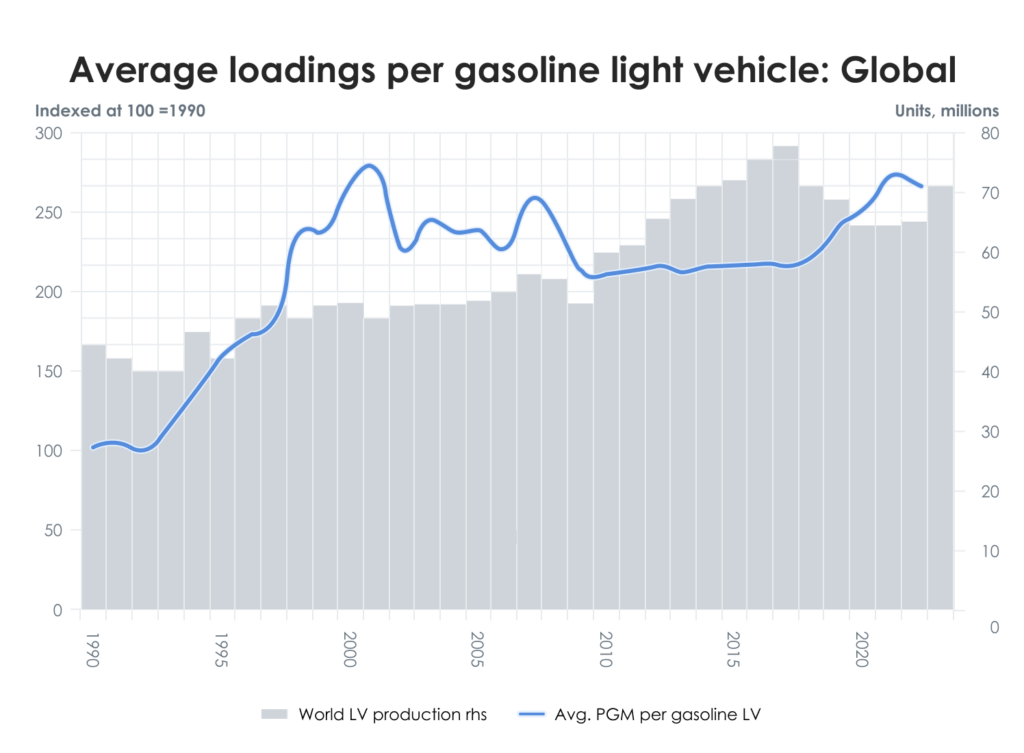
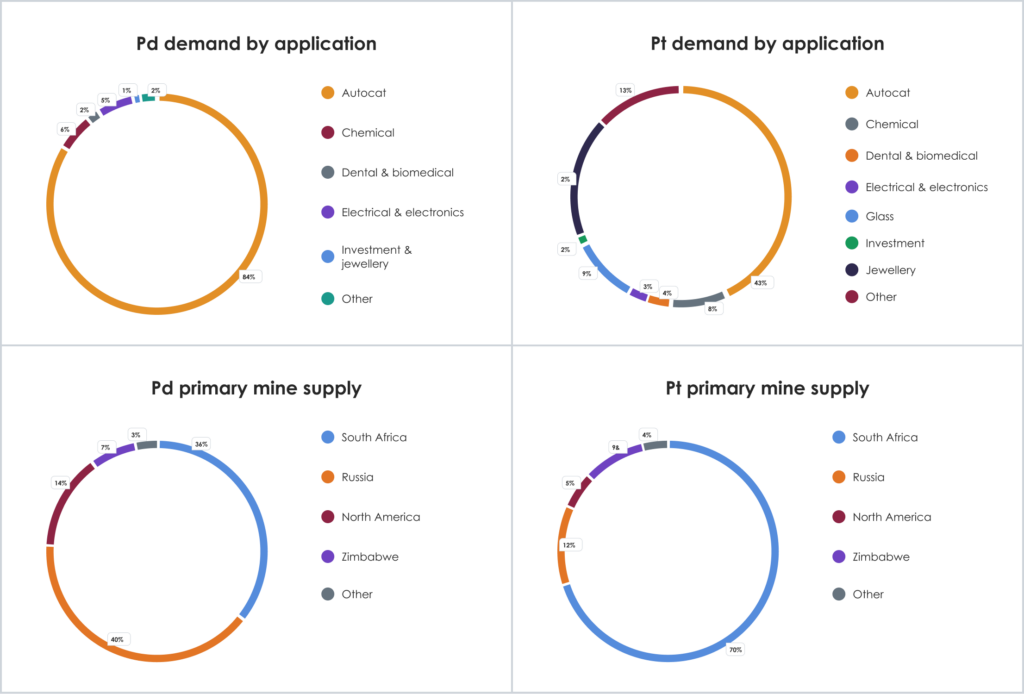
The auto industry dominates the demand for PGMs. According to sustainable technology company, Johnson Matthey, autocatalysts alone account for 43% of global platinum, 84% of global palladium and 90% of global Rhodium consumption. Platinum loadings—referring to the quantity of metal used—are typically higher in diesel engines, while palladium is more heavily used in petrol engines. A typical autocat contains six grams to 10 grams of PGM’s. This may differ depending on the engine size, vehicle type, and emission standard. This distinction is significant given the ongoing shifts in automotive technology. As global emission standards have tightened, a consulting firm specialising in precious metals, SFA (Oxford), estimates that average PGM loadings in autocatalysts have increased almost nine times since the ’90s, see figure 1 and figure 2 below.
Figure1: Global average loadings per light gasoline vehicle
Source: SFA (Oxford), GlobalData
Figure 2: 2E metals supply/demand dynamics snapshot
Source: Johnson Matthey PLC – PGM Market report May 2024
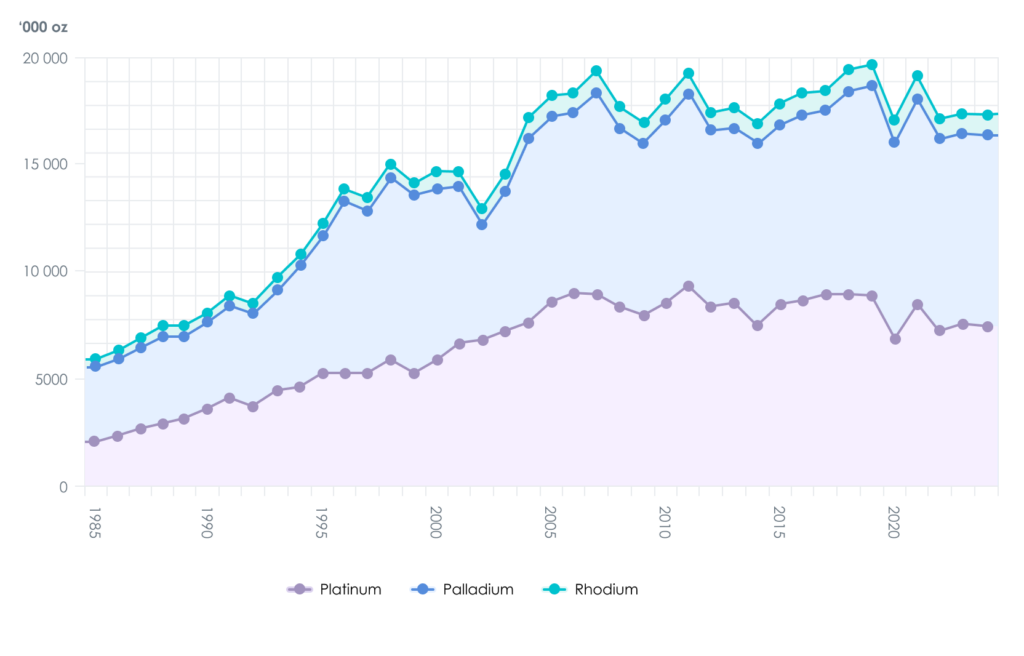
On the supply side, PGM production is highly concentrated, with South Africa and Russia providing over 75% of the global mine supply. Recycling also plays a substantial role, with secondary sources contributing approximately 20% of platinum and 30% of palladium supply. The scarcity of these metals, combined with concentrated production, makes supply particularly sensitive to disruptions, whether due to geopolitical factors or labour unrest. Over the 10 years ending 2023, the collective supply of platinum, palladium, and rhodium has failed to grow, with total supply in 2023 1% lower when compared to 2013. In fact, over the last five years, total supply for the three metals, platinum, palladium and rhodium, were down 13%, 11% & 10% respectively, see figure 3 below.
Figure 3: Total supply in ‘000 ounces
Source: Johnson Matthey PLC – PGM Market report May 2024
Recent price trends and market outlook
The long-term outlook for PGMs, particularly palladium, suggests a market surplus as the global transition toward battery electric vehicles (BEVs) accelerates. Generally speaking, a market surplus occurs when supply exceeds demand, causing prices to decline, while a deficit arises when demand outpaces supply, driving prices up.
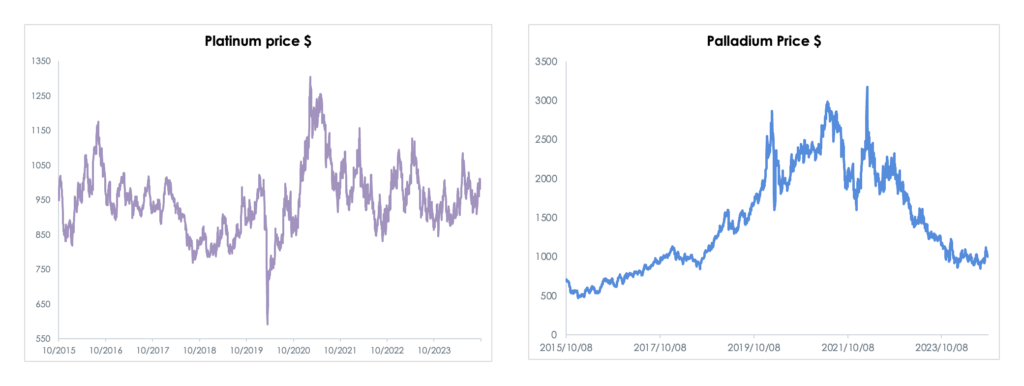
Unlike traditional vehicles, BEVs do not use PGMs because they rely on electric motors powered by rechargeable batteries. This shift has created challenging conditions for PGM prices in recent years. Palladium, for instance, has seen its price fall by approximately 69% from its all-time high of $3,172 in March 2022. Platinum has been somewhat more resilient, with prices down 25% since their peak in February 2021, thanks to its broader range of uses beyond the automotive sector, see figure 4 and figure 5 below.
Figure 4 and 5: Dollar spot price per ounce – 2E Metals
Source: Bloomberg
Despite these declines, we believe the market may be too pessimistic about PGMs, largely due to expectations around BEV adoption. There are early signs that the market dynamics may not be as negative as expected. Factors such as slower-than-anticipated BEV adoption and continued demand for hybrids and hydrogen fuel cells suggest that PGMs could retain their importance for longer than the current consensus assumes.
In South Africa, investors can gain exposure to PGM markets through companies like Impala Platinum, Northam Platinum Holdings, Anglo American Platinum, and Sibanye Stillwater. These miners are highly leveraged to PGM prices and have experienced significant pressure over the past two years. All four companies have seen their stock prices fall by more than 50% since the market peak in March 2022. This decline reflects the combined impact of weakening PGM prices and rising operational costs, which have squeezed earnings and cash flows.
As a result of the weakness in PGM prices, the sector has experienced a significant de-rating, with valuations down approximately 60% from their peak in March 2022, based on the price-to-book valuation metric. In figure 6, below, we provide the price-to-book ratio of Impala Platinum, the largest PGM producer by weight in the index, with other sector names trading at similar depressed levels.
Figure 6: Valuation looks appealing on a risk adjusted basis
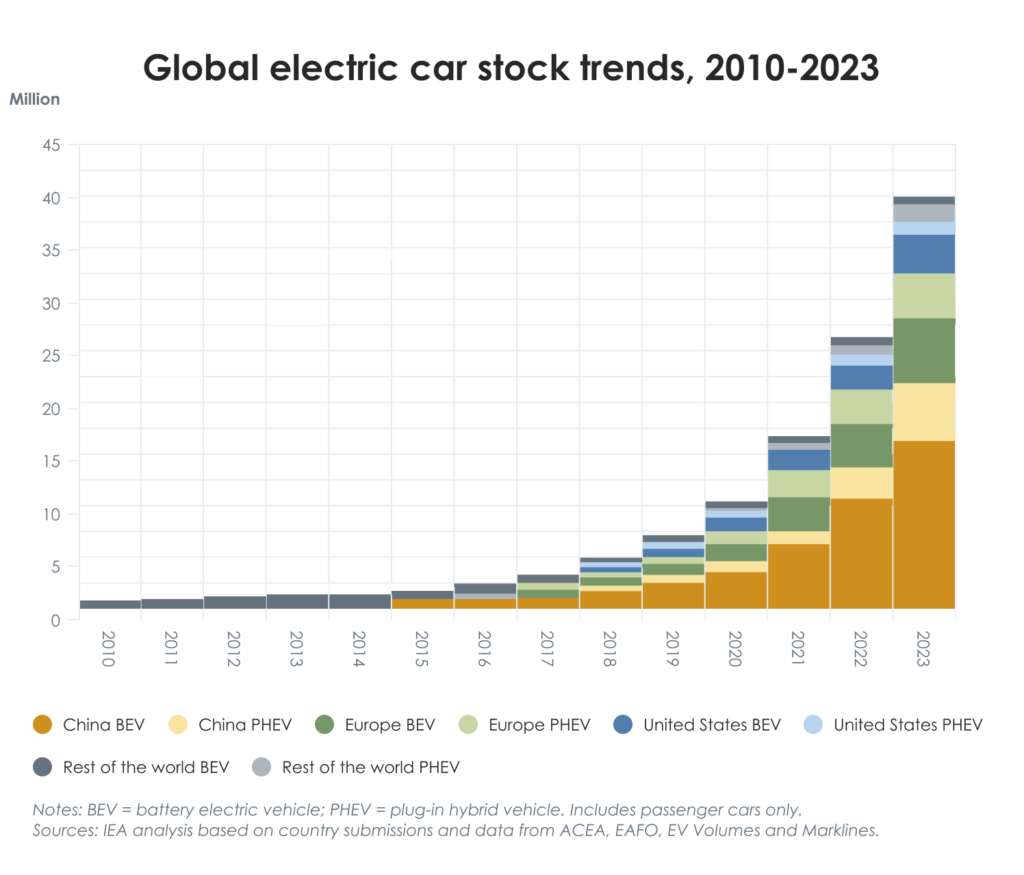
Source: IEA Global EV Outlook 2024 IAE about deve;
However, the rapid growth of the EV market is not without its challenges. In our previous article, Valuing Tesla – Leading the Way or Just Another Cog in the EV Machine?, we outlined some of the major obstacles that the EV industry faces. The most significant challenge remains the high cost of batteries, which are still not cost-competitive when compared with ICE vehicles. UBS estimates that the raw materials for a BEV are twice as expensive as those for a conventional ICE vehicle, while the gap for PHEVs is smaller at 1.3 times. As battery production scales and new technologies emerge, this gap should narrow. However, the increasing demand for critical minerals such as lithium, cobalt, and nickel, and the concentrated nature of their supply (primarily in China and the Democratic Republic of Congo), pose risks to the long-term viability of EV growth.
Another key challenge is the development of charging infrastructure. Although the number of charging stations is increasing, particularly in China, the convenience and speed of refuelling ICE vehicles still outweigh the current infrastructure available for EVs. A significant buildout of grid capacity and alternative energy sources will be required to accommodate mass EV adoption.
Additionally, regulatory support varies widely by region. While some countries are making aggressive strides toward promoting EV adoption, others are lagging. This uneven support could hinder global EV penetration in the near term.
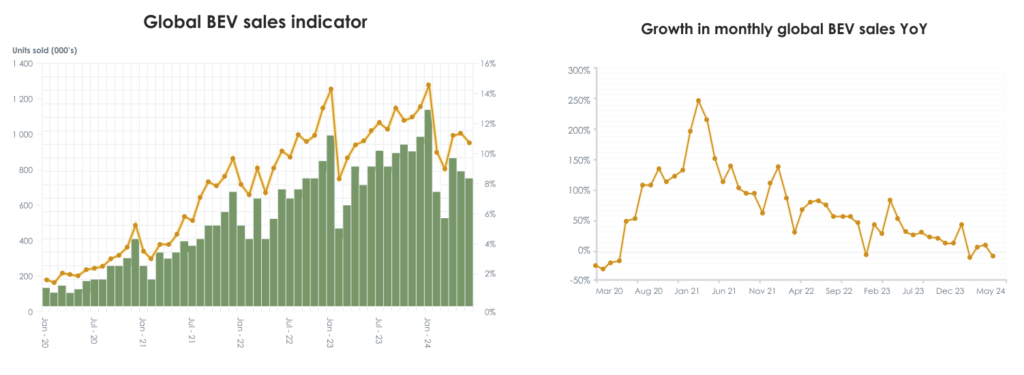
Consumer surveys have also highlighted persistent concerns about the drawbacks of BEVs, including high purchase prices, range anxiety, and the lack of charging infrastructure. These factors have contributed to a slowdown in BEV market share growth. Data from SBG Securities shows that the global BEV market share has stagnated at 11% over the past two years and even declined from around 15% at the beginning of 2024 to 11% more recently; see figure 8 and figure 9 below.
Figure 8 and 9: Global BEV sales indicator and growth in monthly global BEV sales
Hybrid and hydrogen vehicles: A lifeline for PGM demand?
One area that we believe is underappreciated by the market is the growing demand for PHEVs and FCEVs, which do consume PGMs. FCEVs, for example, rely on platinum in their fuel cells to generate electricity through a chemical reaction between hydrogen and oxygen. This technology is still in its early stages, but several automakers, including Ford, GM, Volkswagen, Toyota, and Mercedes, have recently scaled back their BEV targets in favour of hybrid vehicles due to more favourable economics as waning demand for BEV’s pressure margins.
PHEVs have been gaining significant traction, with growth surpassing many expectations. According to Bloomberg Intelligence, global sales of PHEV passenger cars increased by 44% in 2023 and are projected to rise by another 50% in 2024. Much of this expansion is driven by strong adoption in the United States and China.
As a result of this rapid uptake, industry experts have begun revising their forecasts for BEV penetration by 2030. Some estimates have been adjusted downward, with projected BEV market share falling from approximately 50% to as low as 30%. Bloomberg Intelligence now estimates that by 2030, the global market share for hybrid passenger vehicles (32%) will surpass that of BEVs (31%).
We believe this trend provides long-term support for platinum and palladium demand, as the increasing hybridisation of drivetrains by original equipment manufacturers and growing consumer adoption will sustain robust demand for PGMs well into the future.
Concluding Remarks
The PGM market is shaped by complex demand and supply factors, particularly as automotive technologies and regulations evolve. While PGMs have been vital in curbing emissions through catalytic converters, the rapid growth of BEVs presents challenges to future demand. However, the rising adoption of PHEVs and FCEVs provides an offset, as these vehicles still rely on PGMs.
Despite recent price declines, market sentiment may be overly negative. Slower-than-expected BEV uptake and sustained demand for hybrid technologies indicate that PGMs will continue to play a significant role in the automotive industry. Additionally, the heavy concentration of PGM production in regions like South Africa and Russia creates potential supply risks, further underscoring their importance.
Looking ahead, it’s crucial for PGM stakeholders to navigate these changes and seize emerging opportunities. PGM mining companies’ efforts to restructure and manage costs could position them well as market conditions shift. While challenges persist, the long-term outlook for PGMs may be more favourable than current perceptions suggest, driven by changing consumer trends and regulatory developments. As we navigate this transitional phase towards greener technologies, understanding the evolving landscape will be crucial for stakeholders within the PGM industry.
References
- Johnson Matthey – When using this data, please credit Johnson Matthey plc and ‘PGM Market report May 2024’
- IEA – Global EV Outlook 2024 – chrome-extension://efaidnbmnnnibpcajpcglclefindmkaj/https://iea.blob.core.windows.net/assets/a9e3544b-0b12-4e15-b407-
- 65f5c8ce1b5f/GlobalEVOutlook2024.pdf
- UBS – South African Mining Sector Keys – 09/11/2024
- Bloomberg
- https://www.sfa-oxford.com/market-news-and-insights/sfa-the-autocatalyst-a-potted-history/
- https://www.implats.co.za/stories/understanding-the-sustainability-performance-of-pgms.php


